News & Insights
When sourcing a replacement engine or specifying a new build, the choice between the Weichai WD615 and WP10 comes up repeatedly — and for good reason. Both are 6-cylinder diesel platforms widely used across HOWO, Shacman, and FAW heavy trucks. Both carry genuine Weichai engineering. But they are not interchangeable, and the wrong choice affects operating costs, parts availability, and long-term reliability.
This guide covers the technical differences that matter to fleet operators, importers, and maintenance managers making a real procurement decision.
The WD615 entered production in the 1990s as Weichai's first high-output heavy-duty diesel platform, developed in technical partnership with Steyr. For over two decades it became the dominant engine in Chinese heavy trucks exported to Africa, the Middle East, Southeast Asia, and Central Asia. Its longevity in the field created an enormous installed base — which is why WD615 spare parts demand remains strong to this day.
The WP10 was introduced as the next-generation platform, sharing the same 9.726-litre displacement but rebuilt around a modern high-pressure common rail fuel system. It brought tighter emission compliance, improved fuel consumption, and compatibility with electronic diagnostics. From around 2010 onward, most new HOWO and Shacman truck lines began specifying WP10 rather than WD615.
Understanding which generation your truck runs — and what that means for sourcing — is the starting point for any serious engine decision.
| Specification | Weichai WD615 | Weichai WP10 |
|---|---|---|
| Displacement | 9.726 L | 9.726 L |
| Configuration | 6-cylinder inline | 6-cylinder inline |
| Power Range | 266 HP – 380 HP | 270 HP – 380 HP |
| Max Torque | Up to 1,500 N·m | Up to 1,600 N·m |
| Fuel Injection System | Mechanical pump (older variants) / early electronic | High-pressure common rail |
| Emission Standard | Euro II / Euro III | Euro III / Euro IV / Euro V |
| Cooling System | Water-cooled | Water-cooled |
| Aftertreatment | None (Euro II) / EGR (Euro III) | SCR or EGR+SCR depending on variant |
| Dry Weight (approx.) | ~850 kg | ~870 kg |
On paper, the specifications look nearly identical. The difference lies in the injection system and the emission compliance architecture — both of which have significant downstream implications for operating environment, fuel quality tolerance, and parts sourcing.
The WD615 remains the correct engine choice in several specific scenarios:
Replacement for existing WD615-equipped trucks. If you are operating a HOWO A7, Shacman F3000, or FAW J5P built before 2012, the installed engine is almost certainly a WD615 variant. Replacing it with a WD615 assembly eliminates compatibility risk — same mounting points, same wiring harness connectors, same transmission interface.
Low-emission-regulation markets. In countries where Euro II or Euro III is the operative standard, the WD615 is fully compliant and avoids the complexity of SCR aftertreatment systems. For fleet operators in markets where AdBlue/DEF supply is unreliable, this is a practical advantage.
Established parts ecosystem. The WD615 has been in production and in service for 30+ years. Every major parts category — turbochargers, fuel pumps, cylinder heads, piston sets, crankshafts — is deeply stocked across Weichai's authorized distribution network. Lead times are short and prices are well-established.
Common WD615 variants by horsepower:
WD615.46: 336 HP — standard configuration for 6×4 tractor trucks
WD615.69: 380 HP — higher output, long-haul applications
WD615.47: 266 HP — lighter-duty and vocational applications
The WP10 is the correct specification for trucks built from roughly 2010 onward on updated platforms.
HOWO T5G and T7H. These models were designed around the WP10. The engine bay geometry, ECU wiring, and exhaust routing are built for the WP10 architecture. Fitting a WD615 is technically possible with modifications but introduces unnecessary complexity and voids compatibility guarantees.
Shacman X3000 and M3000. Both platforms ship standard with WP10 engines across their power range (310 HP–375 HP). Parts for these models are sourced through the WP10 supply chain.
Stricter emission markets. For trucks operating in countries enforcing Euro IV or Euro V — including parts of South Africa, Egypt, and increasingly Gulf states — the WP10's SCR-equipped variants are compliant where the WD615 is not.
Fuel efficiency. The high-pressure common rail system in the WP10 delivers measurably better fuel consumption per tonne-kilometre compared to older WD615 mechanical pump configurations. For high-mileage long-haul operations, this compounds into meaningful cost differences over a vehicle's service life.
Common WP10 variants:
WP10.310: 310 HP — regional and construction applications
WP10.336: 336 HP — most common long-haul variant
WP10.375: 375 HP — heavy-duty tractor and tipper
| Truck Model | Typical Engine Fitment |
|---|---|
| HOWO A7 (pre-2012) | WD615 |
| HOWO T5G | WP10 |
| HOWO T7H | WP10 |
| Shacman F3000 | WD615 |
| Shacman X3000 | WP10 |
| Shacman M3000 | WP10 |
| FAW J5P (pre-2012) | WD615 |
| FAW J6P | WP10 |
| CAMC (Hanma) | WP10 (various) |
This table covers the most common configurations. Some models were produced across multiple generations with both engine types depending on the build year and export market specification. When in doubt, the engine data plate on the block is the definitive reference — not the truck model name alone.
The WD615 with conventional diesel oil is typically serviced at 20,000 km intervals under normal operating conditions. In dusty or high-load environments, 15,000 km is the practical recommendation.
The WP10, with its tighter common rail tolerances, requires high-quality diesel oil meeting CI-4 or better specification. Oil change intervals are generally 20,000–25,000 km, but the oil quality requirement is non-negotiable — using substandard oil in a common rail system degrades injectors significantly faster than in a mechanical pump engine.
This is where the two platforms diverge most significantly in operational cost.
WD615 fuel injection pumps are mechanically straightforward — a trained diesel mechanic in any rural workshop can adjust, rebuild, or replace them with basic tooling. The parts are inexpensive and widely stocked.
WP10 common rail injectors require specialist equipment for testing and calibration. Replacement injector cost is substantially higher per unit. In markets with limited specialist tooling, this is a genuine operational consideration — not a reason to avoid the WP10, but a reason to ensure your maintenance infrastructure is prepared before committing to the platform.
Both platforms use turbochargers, but WP10's higher-boost common rail configuration places more thermal demand on the turbo. Genuine Weichai turbochargers for both platforms are available through the authorized supply chain. Using non-original turbochargers is where many field failures originate — a pattern consistent across both engine families.
The decision is straightforward when framed correctly:
If your trucks are already running WD615, source WD615. The compatibility, parts availability, and field serviceability arguments all point the same direction. Upgrading to WP10 for a replacement is rarely justified unless the entire drivetrain is being overhauled.
If your trucks were built after 2012 on a platform that shipped with WP10, source WP10. The engineering of these platforms assumes WP10 dimensions, ECU compatibility, and exhaust routing.
If you are purchasing new trucks for a market with Euro IV or V requirements, the WP10 is the correct and often only compliant option.
If you operate in a remote market with limited diagnostic tooling, the WD615's mechanical injection system offers genuine serviceability advantages that are worth factoring into total cost of ownership — particularly for the first few years of operation in a new market.
The wrong answer is specifying by price alone without reference to the installed platform. A lower-cost engine that requires modification to fit, or that the local service network cannot support, is not a cost saving.
Both the WD615 and WP10 are subject to widespread counterfeiting in export markets. The difference between a genuine Weichai assembly and a copy sold under the same part number can be invisible at purchase and catastrophic in the field — typically manifesting within 30,000–50,000 km as premature bearing failure, head gasket failure, or injector degradation.
Genuine Weichai engines and components are supplied through authorized distributors holding a formal power of attorney from Weichai Power. Verification of distributor status is straightforward — any legitimate authorized supplier will provide documentation on request.
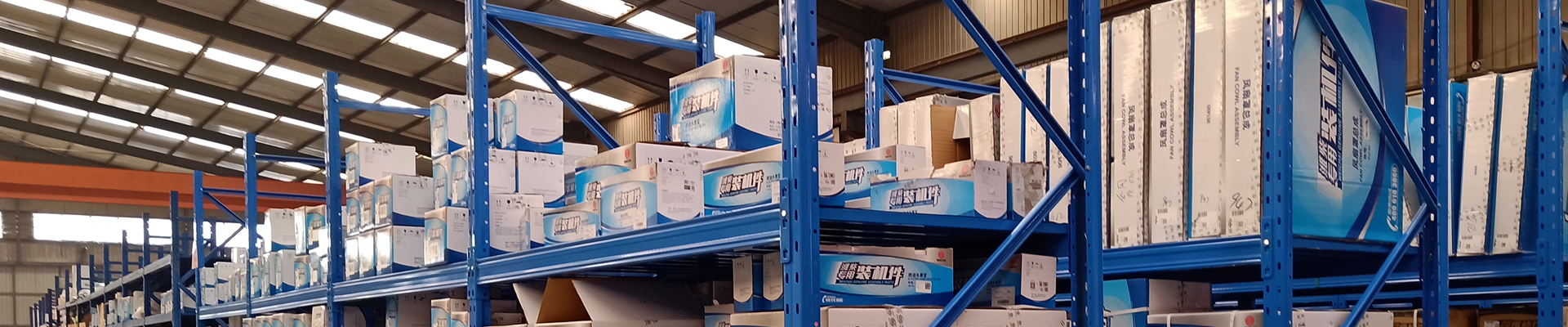
We hold official Weichai distributor authorization and supply both WD615 and WP10 engine assemblies, along with the full range of genuine engine parts for both platforms. Our warehouse carries over 100,000 SKUs with real-time stock.
If you have a specific truck model, build year, and application in mind, send us the details and we will confirm the correct engine specification and provide pricing with lead time. We respond to technical enquiries within 24 hours on business days.
[View Weichai Engine Assemblies →]
[See Full Weichai Engine Model Range →]


