When comparing Chinese heavy-duty trucks for construction projects, mining operations, parts businesses, or fleets, there is no single choice. As factors such as engine power, working environment, vehicle configuration, maintenance access, parts availability, and long-term operating costs all influence the best option. For buyers in Africa, the Middle East, Russia, and Central Asia, these factors can also have a direct impact on vehicle uptime and total operating costs.
In this article, we will explain the most suitable applications for each brand and why it is important to purchase suitable parts once the truck starts working.

Shacman vs Sinotruk heavy-duty truck comparison.
Sinotruk is one of the leading heavy truck manufacturers in China. Its export line includes the renowned HOWO series, SITRAK and other commercial models, covering tractors, dump trucks, cargo trucks, and other commercial vehicles. These trucks are widely used in long-distance logistics, construction, mining, regional freight, and special purpose transportation.
Shacman, owned by Shaanxi Heavy Duty Automobile Co., Ltd., is another major Chinese heavy-duty truck brand. It enjoys a high reputation in demanding operating environments and is widely used in dump, tractor, and cargo truck applications, especially for construction purposes.
Brand | Representative Models | Common Uses | Main Strengths |
Sinotruk | HOWO 371, HOWO A7, T7H/T7, SITRAK... | Long-haul logistics, regional freight, construction, mining, mixed fleet operations | Complete heavy-duty vehicle and parts ecosystem, with products exported to 100+ countries and annual production capacity exceeding 300,000 units |
Shacman | F3000, X3000, X5000/X6000, M3000... | Construction, mining, logistics, long-haul transport | Founded in 1968, delivered 2.3+ million trucks worldwide, and built a global network covering 150+ countries with 400 overseas service stations |
In addition, both brands offer a variety of engines, transmissions, axle combinations, cab configurations, and emission specifications. Therefore, a brand comparison can serve as a way to guide your purchasing choice. But it should not replace a check of the exact truck setup.

Sinotruk HOWO and Shacman heavy-duty tractor trucks in an industrial logistics.
Engine output is greatly important when the truck frequently carries heavy loads, climbs gradients, works off-road, or operates long hours. Both of these 2 brands provide high-output configurations for these working conditions. For example, the HOWO 371 produces 371 HP(horsepower) and is commonly used as a 6×4 dump truck. It can also work as a tractor head in construction or mining. Meanwhile, the Shacman F3000 offers 375–480 HP and is designed for heavy-duty dump as well as tractor applications.
Their differences are more pronounced in the typical applications of each brand. Sinotruk covers a broad range of products, from the HOWO 371 and HOWO 70 mining dump truck to the HOWO A7 for long-distance hauling. In contrast, Shacman appears to be more suitable for rugged and heavy-load tasks. The F3000 is widely used in demanding construction and mining conditions, while the X6000 is positioned for long-haul and logistics work.
The examples suggest that Shacman and Sinotruk are not chasing the same goals. Shacman seems to put more weight on tough, demanding work. Sinotruk, on the other hand, offers more ways to set up the equipment.
For buyers, it's better not only look at horsepower when comparing Shacman and Sinotruk. Check the engine, torque, transmission, drive configuration, payload, and duty cycle. For distributors and importers, the exact engine and drivetrain specifications also matter when planning Sinotruk parts inventory. Because different models and configurations can require different replacement components.
In Africa, the Middle East, Russia, and Central Asia, buyers attach great importance to the durability of trucks. Because heavy-duty trucks in these regions may face rough roads, heavy loads, dust, high temperatures, and long working hours. In terms of durability and reliability, Shacman and Sinotruk have their own established experience in these environments.
Shacman is especially known for its rugged, heavy-duty configurations. For example, its F3000 series features a robust frame and reinforced suspension, capable of handling rough terrain, heavy loads, and demanding construction or mining conditions.
Sinotruk has a broader range of applications in construction, mining, logistics, and other heavy-duty transport operations. Take HOWO 371, for example, it is known for its simple design and durability in construction and mining applications. This broader application scope can benefit buyers managing different types of fleet operations. It allows them to use Sinotruk platform under various working conditions, rather than primarily focusing on demanding off-road applications.
Therefore, the difference in durability between Shacman and Sinotruk should be evaluated based on the working environment rather than the brand alone.
If you prioritize the durability of harsh terrain, heavy loads, and dense construction or mining work, Shacman can better meet your needs. If you need a multifunctional truck for mixed logistics, construction, mining, and fleet applications, Sinotruk is still a good choice. In any case, actual reliability still depends on the vehicle configuration, how it is maintained, how it handles loads, road conditions, and operating environment.
Another practical way to compare Shacman with Sinotruk is to check the availability of parts and service support. For an international fleet, downtime can be costly if a truck is functional, but repairs take too long. When a key part is missing for weeks, the downtime also accumulates fast.
Sinotruk has a broad international aftermarket covering truck engines, transmissions, axles, cab components, braking systems, electrical parts, and chassis components. Shacman maintains an overseas parts network covering major truck series such as the X6000, X5000, X3000, H3000, L3000, and F3000, supported by service and parts locator tools. Therefore, buyers should check the difficulty of obtaining parts and service coverage alongside vehicle durability and performance.
Ultimately, the better aftermarket option is not only tied to the truck brand. It also depends on the parts and service network available in the buyer's market. If you run vehicles for a long time, you may care about a strong combination of vehicle reliability, parts availability, and responsive supplier support as important as the truck's original specifications.
For buyers looking for reliable parts support, Jinan Zhixing Tianxia Auto Parts Co., Ltd. is a Jinan-based China truck parts supplier serving international distributors, fleets, and repair shops. With Tier-1 regional authorization for SINOTRUK and Shacman, it offers a broad inventory of heavy-duty truck parts and helps buyers consolidate multi-brand orders through one supply channel.
The table below summarizes the main differences between Shacman and Sinotruk without assuming that one brand is better for every application.
Factor | Sinotruk | Shacman |
Engine & Performance | Smooth and powerful power delivery; strong heavy-load stability supported by MAN-based rear axle technology | Lower fuel consumption in high-speed operations; strong power output, high torque, strong climbing ability, and robust chassis frame |
Fuel Efficiency | The “HOWO Wuji S Powertrain” improves energy efficiency to a leading industry level, reaching 54.16% | Good fuel control in short-distance standard-load operations, while slightly higher fuel consumption than HOWO in long-distance standard-load transport; Delong X6000 uses a low-ratio design to optimize high-speed fuel economy; |
Durability | Mature chassis and engine matching; stable performance in harsh conditions such as mining areas and mountainous roads | Delong series is widely recognized for heavy-load construction and mining applications, featuring a robust frame, durable rear axle, and strong resistance to harsh operating conditions |
Technology & Configuration | Benefits from accumulated MAN joint-venture technology; mature core technologies in engines, axles, and other components | Holds China’s first heavy-duty truck autonomous driving test license and has launched mass-produced L3 autonomous driving models; offers various factory-customized configurations with active intelligent technology development |
Cab Comfort | SITRAK C9H features a flat-floor cab with an interior height of 2.13 m, providing outstanding cabin space among similar heavy trucks | Delong X6000 also adopts a flat-floor cab with a 2.13 m interior height and spacious design; however, cab sealing requires further improvement, and long-distance comfort is slightly behind HOWO |
Parts Availability | Extensive parts supply network; transparent parts pricing and convenient maintenance | Wide market acceptance; sufficient parts availability and convenient maintenance in different regions |
Maintenance | Engine oil change interval up to 100,000 km; average maintenance cost around RMB 3,000 per 100,000 km; Sitrak models equipped with ZF transmissions have higher gear oil costs | Clear maintenance schedule; TCO management programs can significantly reduce repair costs over two years |
Price & Value | HOWO T7H reference price: USD 70,000–90,000; high-end Sitrak series are priced higher; overall positioned in the mid-to-high-end segment | H3000 starts from around USD 60,000; X3000 around USD 70,000–95,000; positioned as a more value-oriented option with strong resale value |
Best For | Cross-province trunk logistics, long-distance standard-load transport, urban construction waste transport, and buyers prioritizing comfort | Buyers with limited budgets who prioritize durability and lower ownership costs |
The table highlights a difference between Shacman and Sinotruk: there is no winner without defining the operating scenario. Parts, technicians, fuel quality, roads, and emissions requirements can change the result.
Fuel efficiency is an important factor when you choose between Shacman and Sinotruk, especially for long-haul or high-mileage operations. Both brands offer various fuel-efficient configurations. For instance, the HOWO A7 is designed for long-haul work, improving fuel economy. On the Shacman side, models like the F3000 have received attention for its tuned powertrain solutions that help in day-to-day operation. Therefore, the key is to check the exact truck configuration and its specifications. Do not decide based on the brand name by itself.
During the purchasing process, do not only focus on the sticker price. Checking the fuel consumption, maintenance costs, parts, freight, and potential downtime is also important. Add those items up to estimate the truck's total operating cost. It's better to keep operating costs under your actual load, route, and working conditions.
In terms of technology advancement, new Shacman and Sinotruk truck platforms can include advanced engine control, electronic parts, safety tech, and a more comfortable cab.
For a buying decision, configuration also matters. For example, a 6×4 dump truck used in a quarry is not set up the same way as a tractor for long-haul freight. Before you place an order, check axle configuration, suspension, wheelbase, fuel tank, transmission, engine emission level, and body compatibility first.
For long-distance fleets, seat design, sleeping space, visibility, air conditioning, and cab suspension can affect driver fatigue. For mining or short-cycle dump work, chassis strength, cooling, ground clearance, and serviceability may matter more.
That is why the best truck should also be selected based on specific needs, not reputation alone.

Heavy-duty truck working in the demanding mining and construction.
Before placing an order, ask 4 questions:
1. What is the main application? Long-haul logistics, construction, mining, quarrying, regional freight, or mixed use?
2. What loads and road conditions will the truck face? Payload, gradients, road quality, ambient temperature, and operating hours affect the ideal specification.
3. Which powertrain can be supported locally? Check the engine, gearbox, axle, and electrical systems—not just the truck brand.
4. Can replacement parts be sourced reliably? This is where Sinotruk parts or Shacman parts availability becomes a long-term purchasing consideration.
These questions become even more important for buyers who already operate Chinese heavy-duty trucks. If you already operate HOWO or other Sinotruk vehicles, a stable source of Sinotruk parts can simplify maintenance planning and reduce procurement delays. For mixed fleets, a supplier supporting both Sinotruk and Shacman components can also reduce the number of purchasing channels.
The difference between Shacman and Sinotruk is therefore less about declaring a winner and more about matching the truck to the work.

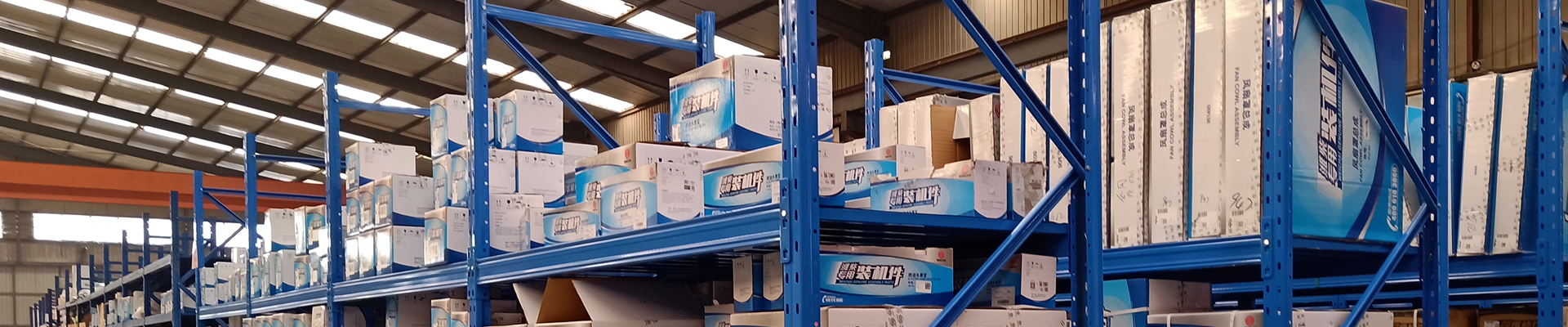
Modern heavy-duty truck parts warehouse.
For distributors, fleets, repair businesses, and other commercial buyers, parts sourcing is an important part of keeping trucks in service and managing long-term procurement. Whether you need Sinotruk parts or Shacman parts, do not rely on the brand name alone. Give your supplier enough vehicle and component information to verify the correct part before quotation.
Send your supplier:
l Truck model and production year
l Engine model
l Gearbox model
l Part number
l VIN, when available
l Clear photos of the old part
l Required quantity
A part number is usually the fastest way to improve matching accuracy. For older trucks or mixed specifications, the supplier may also need to confirm the engine, transmission, or chassis configuration.
For buyers managing multiple truck models or sourcing several categories at once, a supplier with a broader product range can simplify procurement. Jinan Zhixing Tianxia Auto Parts Co., Ltd. supplies Sinotruk and Shacman parts across major heavy-duty truck categories, including engines, transmissions, cabs, clutches, chassis, braking systems, and electrical components. We also supply FAST gearbox products and Weichai engines used in Chinese heavy-duty trucks. This allows different parts and brands to be consolidated through one supply channel instead of being sourced separately from multiple suppliers.
If your priority is rugged heavy-duty operation, construction, mining, and value-oriented configurations, Shacman may be the better fit. If you prioritize broad model coverage, established international use, logistics applications, and a mature Sinotruk parts ecosystem, Sinotruk is a strong choice.
The most important difference between Shacman and Sinotruk is not a simple “better or worse” label. The better truck is the one whose engine, transmission, axle, configuration, service support, and replacement parts match your operating environment.
Whether you are sourcing complete trucks, tractor or dump trucks, or replacement parts for vehicles already in service, our team can help you identify the right products for your application.
Send us your truck model, production year, engine or gearbox model, part number, product photo, or required vehicle specification. We can help check compatibility, confirm product availability, and prepare a quotation based on your order requirements.
Neither is totally better. The difference between Shacman and Sinotruk becomes clearer when you compare application, configuration, service access, parts availability, and total ownership cost. Shacman can be attractive for rugged heavy-duty work, while Sinotruk is strong for broad fleet and logistics applications.
2. What is the main Shacman vs Sinotruk difference?
The main gap is where each brand puts its focus, and how many setup options you can get. Shacman is usually tied to tough work. People apply it in construction sites, mining routes, heavy hauling, and trips that face rough roads and heavy loads.
Sinotruk tends to cover more models and more variations. You can find it applied in logistics industry, long-haul trucking, building projects, mining work, and fleets that mix different needs. It also has a wide parts network in many markets.
However, you should not pick a side based on brand only. The actual engine, transmission, axle, payload requirement, road conditions, local service support, and replacement-parts availability can make one configuration more suitable than another.
3. Are Sinotruk parts easy to source?
In markets with established Sinotruk fleets, Sinotruk parts can be relatively accessible through dealers and specialized suppliers. Availability still varies by model, part number, country, and logistics route.
4. Which is better for mining and construction?
For severe construction or mining work, Shacman is often considered because of its rugged heavy-duty configurations while Sinotruk also offers suitable trucks.Therefore, do remember to compare axle, suspension, engine, transmission, and payload specifications for the actual use.
5. What information should I provide when buying Sinotruk parts?
For Sinotruk parts, please provide the truck model, engine model, gearbox model, part number, VIN if available, photos of the old part, and the quantity you need.
6. Can one supplier provide both Sinotruk and Shacman parts?
Yes. A specialized heavy-duty parts supplier can support both brands. This can simplify procurement for mixed fleets and reduce the number of separate suppliers you need to manage.
1. Carused.jp — HOWO Trucks vs. Shacman Trucks
3. ELORRY — Comparing HOWO and SHACMAN Dump Trucks
4. Reddit discussion on Chinese trucks, including HOWO and Shacman
5. TruckRagreat — Cummins vs. Weichai: Which Diesel Engine Is Right for You?


