News & Insights
A heavy truck transmission operates under conditions that no passenger car gearbox ever faces — 1,600 to 3,200 Nm of diesel torque transmitted through gear teeth for hundreds of thousands of kilometers, often overloaded, on unpaved roads, in ambient temperatures from -30°C to 50°C. When the transmission fails, the truck does not limp home — it stops where it is, and every hour of downtime costs the operator revenue. For fleet maintenance managers and truck parts distributors, understanding FAST Gear transmission model identification, high-wear components, and genuine parts sourcing is not optional — it is the difference between a 4-hour clutch job and a week-long transmission rebuild.
FAST Gear (Shaanxi Fast Gear Co., Ltd.) produces over one million heavy-duty transmissions annually, making it the largest truck gearbox manufacturer globally by volume. FAST transmissions are standard factory equipment on the majority of Chinese heavy truck brands: Sinotruk HOWO, Shacman, FAW Jiefang, Dongfeng, and Foton — the same brands that dominate commercial truck fleets across Africa, Southeast Asia, the Middle East, Russia, and Latin America.
The FAST product range spans manual transmissions (9-speed, 12-speed, 16-speed), automated manual transmissions (AMT), and hybrid transmissions with integrated electric motors for the emerging new energy commercial vehicle market. Torque capacity ranges from 300 Nm for light-duty models to 3,200 Nm for heavy mining and construction truck applications. The most widely deployed models in global export markets are the 9JS series (9-speed, up to 1,350 Nm), the 12JS series (12-speed, up to 2,200 Nm), and the 16JS series (16-speed, overdrive capable, up to 2,400 Nm).
Every FAST transmission carries an identification plate riveted to the side of the gearbox housing. The model number on this plate encodes the transmission's specification — ordering parts without it is ordering blind. The naming convention follows a logical structure:
| Code Element | Meaning | Example: 12JS160T |
|---|---|---|
| First digits | Number of forward gears | 12 = 12 forward gears |
| Letter "J" | Mechanical (manual) transmission | J = mechanical transmission |
| Letter "S" | Double intermediate shaft design | S = dual countershaft construction |
| Trailing digits | Maximum input torque × 10 in Nm | 160 = 1,600 Nm maximum input torque |
| Suffix letter | Variant designation (overdrive, direct drive, etc.) | T = overdrive (top gear ratio < 1:1) |
Serial number, manufacturing date, and sometimes the original vehicle VIN are also recorded on the identification plate. For parts ordering, the full model designation — not just the series number — must be provided. A 12JS160 and a 12JS200 share the same basic design but use different gear sets and bearing specifications matched to their respective torque ratings. Parts are not interchangeable between torque classes.
| Component | Function | Wear Symptoms |
|---|---|---|
| Synchronizer Rings & Assemblies | Match gear and shaft speeds before engagement — the most frequently replaced transmission part | Grinding during gear changes, difficulty engaging specific gears, transmission jumps out of gear under load |
| Clutch Release Bearing & Housing | Disengages clutch when pedal is depressed; transfers pedal force to pressure plate | Squealing noise with clutch pedal depressed, heavy pedal feel, incomplete clutch disengagement |
| Gear Shift Cables & Linkage | Transmits shift lever movement to the transmission selector mechanism | Vague or sloppy shift feel, inability to select certain gears, excessive lever movement |
| Power Take-Off (PTO) Unit | Drives auxiliary equipment — hydraulic pumps, dump body hoists, concrete mixer drums | Oil leak at PTO mounting flange, abnormal noise during PTO engagement, failure to engage |
| Input/Output Shaft Seals | Prevent oil leakage where shafts exit the transmission housing | Visible oil leak at front or rear of transmission, low transmission oil level |
| Gear Selector Forks | Slide synchronizer sleeves into engagement with the selected gear | Difficulty engaging specific gears (same gear every time points to fork wear, not synchronizer) |
Synchronizer rings are friction surfaces — they work by pressing a conical brass or sintered metal ring against a matching cone on the gear, using friction to equalize rotational speeds before the gear teeth engage. Every gear change wears a microscopic amount of friction material from the synchronizer ring. Over hundreds of thousands of shifts, the friction surface wears to the point where it can no longer match speeds quickly enough, and the driver feels grinding as the dog teeth clash before the speeds synchronize.
The progression from worn to failed follows a predictable pattern: first, grinding only in one specific gear (the most frequently shifted under load — typically 3rd to 4th or 7th to 8th in a 12-speed). Then grinding spreads to additional gears. Finally, the transmission jumps out of gear under load as the worn synchronizer fails to hold engagement. Catching synchronizer wear at stage one — grinding in a single gear — allows replacement of the affected synchronizer ring. Waiting until stage three usually requires a full transmission overhaul because metal debris from the failing synchronizer circulates through the transmission oil, damaging bearings and gear tooth surfaces.
The transmission is the most expensive single assembly on a heavy truck after the engine. A complete FAST 12-speed transmission costs several thousand dollars — a price that makes the temptation to save money on replacement parts understandable but dangerous. Genuine FAST parts are manufactured to the OEM material specification: specific steel alloy grades, documented heat treatment processes (carburizing depth, hardness profile from surface to core), and dimensional tolerances measured in microns. Aftermarket parts may use the correct external dimensions but substitute lower-grade alloys and simplified heat treatment — differences invisible to the naked eye that reveal themselves only through accelerated wear and premature failure.
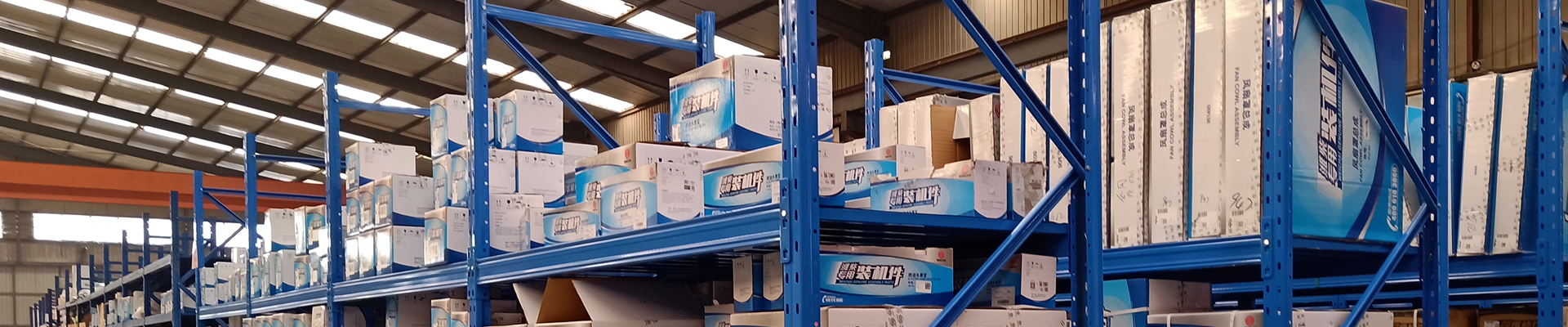
RAgreat's dedicated FAST warehouse in Jinan — staffed with a professional technical team — stocks genuine FAST components across the full transmission product range, from light to heavy components, classified and stored with professional lifting equipment for safe handling of large items. The warehouse integrates with RAgreat's broader parts supply chain including genuine Sinotruk HOWO parts and Weichai engine components — enabling fleet customers and distributors to consolidate transmission, engine, and chassis parts procurement through a single supplier rather than managing separate vendor relationships for each system.
RAgreat operates from Jinan High-tech Industrial Development Zone — the headquarters location of Sinotruk and the center of China's heavy truck manufacturing industry. With 25-plus years of industry experience, a registered capital of 30 million yuan, parent and subsidiary combined registered capital of 120 million yuan, total assets of 580 million yuan, and over 6,000 types of spare parts in stock, RAgreat provides genuine parts supply across the full heavy truck ecosystem.
The company's warehouse infrastructure reflects its parts coverage: a Sinotruk warehouse with rapid regional delivery supporting whole vehicle sales and maintenance, a Weichai warehouse for genuine Weichai engine components, a Weichai spare parts warehouse for commonly requested consumables, and a dedicated FAST warehouse with professional technical consultation. For fleet operators, truck parts importers, and maintenance workshop owners seeking reliable transmission parts supply with verified genuine quality, RAgreat provides OEM part number quotation, technical model verification, and global logistics support.
Contact RAgreat with your FAST transmission model number for genuine component quotation, availability, and delivery timeline. Technical parts identification support available.
RAgreat.truck@gmail.com


